Showing posts with label Jesus Christ. Show all posts

Wednesday, 20 January 2010

God's Promises: World Peace (Micah 4)

The previous three chapters of Micah have been indictments against Israel and its prophets. The prophets are false and the country immoral and unjust, crushing the weak and glorifying the ruthless. Micah, through the power of the Holy Spirit, bravely condemns his people and their sins.

The tone changes in Micah 4 to one of redemption and promise. Here God lovingly makes promises that He will bring Israel together again and make them a light to the nations.

Here are the big promises I noticed from chapter 4:

1) Verses 1-2:

It shall come to pass in the latter days

that the mountain of the house of the

LORD

shall be established as the highest of the

mountains,

and it shall be lifted up above the

hills;

and people shall flow to it,

and many nations shall come, and say:

“Come, let us go up to the mountain of

the LORD,

to the house of the God of Jacob,

that he may teach us his ways

and that we may walk in his paths.”

This is a promise: “It shall come to pass”. But what exactly is it that will come to pass? What is the “mountain of the LORD”? When is the time when people will flock to the house of God with open and ready hearts? Is it yet to happen or has this happened or is it happening now?

Let’s start with the last question first: when is this supposed to happen? There is an image later in the chapter which is repeated almost identically in Isaiah 2:1-5:

…and they shall beat their swords into plowshares,

and their spears into pruning hooks;

nation shall not lift up sword against nation,

neither shall they learn war anymore (Micah 4:3)

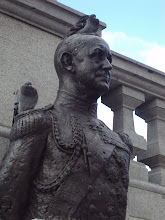
This image has come to represent world peace (check out this statue in front of the United Nations) or a time when war is unnecessary and weapons can be converted into everyday tools. I love this image and the fact that it’s in front of the U.N., but I don’t believe that such an age of peace will ever be ushered in by the United Nations. For a world of peace we need a world without sin and unfortunately the United Nations is made up of sinners – sinners stuck in a world of sin as much as the world they’re trying to fix.

But this world peace is coming (despite our futile and failing efforts) through the hand of Him who promised it. God is promising to bring in peace and change to the world through the only possible source – Himself. Only through Him can the world truly be 1) rid of sin – which means peace! – and 2) unified. If our problem is a lack of unity then we need not a unity through our common humanity (because, as we can see, it doesn’t work! we disagree too much) but a real and binding unity in the body of Jesus Christ and His Holy Spirit. So what we will have in common is not “We’re all human” but “We have been made one with God in Christ”.

Both of these passages from Isaiah and Micah were talking to God’s people about the time of the Messiah. Think about it – who has united the nations and led them to God? The “mountain of the LORD” described in verse 2 is the Temple Mount in Jerusalem, a place “exalted as a source of instruction, justice, and righteousness” (from the ESV Study Bible Notes). Ancient gods supposedly lived on mountains (like Zeus on Mount Olympus) but here we see God’s mountain – the place where He is rightly identified and worshipped – rising above all other mountains, “established as the highest of the mountains” (Micah 4:1). The true God will be lifted and exalted above all the other fake and false gods and He will be worshipped. He will became a focal point of humanity – which indeed Jesus has.

It’s hard not to see Him as the “highest of mountains” in human history – it is quite impossible to get around Him. He’s so important and so changed history that our calendar is divided into two time periods before and after Christ. Truly He unites people together – people from all different backgrounds and religions – and makes them the Lord’s.

But how come we don’t have world peace right now if this passage is about the Messiah? He came, didn’t He? Why isn’t there world peace? Well, this passage is about today – and think about it, because every day there are people all over the world streaming to Jesus and becoming children of God – but it is also about the last day. There have been instances when swords were no longer needed, but there will come a day – the last day – when swords or guns or tanks or A-bombs will never be used again and God will have ultimate mercy on those He made righteous through Christ and ultimate vengeance on those who refuse to turn from their sins. Both are a promise.

Think about this way: there will be world peace when all of God’s enemies are killed and gone. That idea might make you uncomfortable, but think about it: can there be world peace any other way? And if it still makes you uncomfortable, Why? If God is supremely good, why does that idea bother you?

2) The second promise is a rescue from Babylon for Israel:

Writhe and groan, O daughter of Zion,

like a woman in labor,

for now you shall go out from the city

and dwell in the open country;

you shall go to Babylon.

There you shall be rescued;

there the LORD will redeem you

from the hand of your enemies. (Micah 4:10)

This is told to Israel in many other places in the Old Testament as they were conquered and forced to live in Babylon. This is God’s message of hope: Hang on, I will come for you.

So how do we live in the light of such promises? How did Israel live in the light of such a promise in Babylon? It must’ve changed everything! In Babylon Israel would have been under their control and their rule, subject to their culture (which was offensive in many ways to Israel). They were probably looked down upon, probably hated.

Right now as the body of Christ we are under slavery in this world – this is our Babylon, it is not our home. That can become extremely depressing unless we look to God’s promises. We have two important promises right here in Micah: God will draw the nations to Himself in peace and He will deliver His people out of the worst situations. If He said He will deliver us, He will. Look at history: less than a century after Israel was led to Babylon they were released and returned home.

God makes promises out of love and for our hope and joy, and it is ultimately in Christ that all of God’s promises coalesce. Praise be to a wise, wondrous, and merciful God!

“For who has known the mind of the Lord?

or who has been his counselor?” (Romans 11:34)

Thursday, 31 December 2009

The Wedding of a King (Psalm 45)

The heading for this Psalm calls it a love song, and in it we see a bride and groom prepared for each other. But with Paul’s words in the New Testament I think we can also see Christ and the church.

In large part this is because of verses 1-9, which describe a king. This could just be a king, a king like David or Solomon, but the language points to Christ. Verse 1 is almost a statement of worship:

“My heart overflows with a pleasing theme;

I address my verses to the king;

my tongue is like the pen of a ready scribe.”

Here I am to praise the King. The King described here has “grace poured upon his lips” (verse 2) which leads me to think that from his mouth grace is shared, and certainly Jesus’ words are full of God’s grace.

Also in verse 2: “God has blessed you forever.” Verse 3: “Gird your sword on your thigh, O Mighty one, in your splendor and majesty.” These are words that could be describing an earthly king, but they are also fitting to describe the King of Kings.

Verses 4 and 5 begin to blur the distinctions between this King and God. In fact, it seems as if the writer is writing about God here, because the King is doing things God does:

“In your majesty ride out victoriously

for the cause of truth and meekness and righteousness” (verse 4)

God is the one who fights for the weak and the righteous. But this passage is addressed to the king:

“You are the most handsome of the sons of men” (verse 2)

This is about a man, and Christ is a man. This is about God, and Christ is God. If we continue to read Jesus into this text we will find more and more how He fits perfectly. His strength destroys evil:

“Your arrows are sharp

in the heart of the king’s enemies;

the people fall under you.” (verse 5)

Paul, in his first letter to the Corinthians, uses the same language:

“The last enemy to be destroyed is death. For ‘God has put all things in subjection under his feet.’” (1 Cor. 15:26-27)

But then (returning to Psalm 45), in verse 6 the writer addresses this King (and I believe he is still addressing the king, because of verse 7) as God:

“Your throne, O God, is forever and ever.

The scepter of your kingdom is a scepter of uprightness” (verse 6)

This can’t be describing David, because he died. This king is righteous, so that rules out a lot of succeeding kings…and they also died. No, this has to about Jesus, who rules by righteousness and whose throne is forever and ever. No other king can claim that.

Also, the writer calls him God, and in verse 7 he makes a distinction in Trinitarian language:

“You have loved righteousness and hated wickedness.

Therefore God, your God, has anointed you

with the oil of gladness beyond your companions”

“God, your God” is addressed to the king the writer just called God. It’s Jesus and the Father. “God, your God has anointed you” – “Christ” means “anointed one.”

“…with the oil of gladness beyond your companions.” The New Testament describes Christ as the most exalted, the most beloved, beyond anyone else – He is given a better seat than anybody else, He is held in a place of honor higher than anybody else. This can’t be talking about God the Father because God the Father doesn’t have any companions, which I mean as “equals” or “contemporaries”. Nobody else is like God, God has no peers or classmates from ’00. But Jesus, having become a man – while staying fully God – He can call other men and women peers and companions, and in Mark 3:34-35 Jesus calls those who do the will of God his brothers and sisters.

One last detail on verses 1-9: “your robes are all fragrant with myrrh” – I need to find out more about myrrh, like what the heck it is, but I can’t help seeing the Jesus connection here.

Now the psalm shifts to a bride and a wedding. Who could this great king be marrying? The language here also points to more than what’s on the surface, it points to the Church.

The writer tells the bride to “forget your people and your father’s house” (verse 10). That seems to be a small detail wedding in a regular wedding, but in Christ-Church language it is a call to the broken, the weary, the sinners. Forget where you came from, because you now belong to Christ.

For some reason the writer ties that into this idea: “and the king will desire your beauty” (verse 10). If we abandon sin and lift our lives and our hearts to God – if we accept Christ – we will be made righteous like Him. We, as a church, will be beautiful and pleasing to our King. And, “Since he is your lord, bow to him” (verse 11).

This leads to a wedding, and the Bible is full of wedding imagery. Jesus’ first miracle is at a wedding. In Revelation, at the end of time those made righteous by Christ (His church) are led to Jesus in the biggest wedding ever. A wedding is happy, and joyous, it’s about a covenant (and Jesus is the new covenant) and commitment. It’s a time of happiness – “With joy and gladness they are led along as they enter the palace of the king” (verse 15). We are happy at weddings because two together made into one are better than two apart. The Church needs Christ, and when He is finally here we will wonder how we ever got along without Him – that is, Him in the flesh, because He is already ever present (Matthew 28:18-20).

This marriage between Christ and the church, God and man, is celebrated throughout scripture. Isaiah writes:

“Fear not, for you will not be ashamed…

For your Maker is your husband,

the LORD of hosts is his name…

For the LORD has called you

like a wife deserted and grieved in spirit,

like a wife of youth when she is cast off,

says your God.” (Isaiah 54:4, 5, 6)

Finally, the writer of Psalm 45 turns back to addressing the King:

“I will cause your name to be remembered in all generations;

therefore nations will praise you forever and ever.” (verse 17)

Since He was born Jesus has been sought after to worship, His name has always been the most important and He is the most important person in all of history. “Nations will praise you” – just like Rev. 7:9-10 we see:

“…a great multitude that no one could number, from every nation, from all tribes and languages, standing before the throne and before the Lamb” (verse 9).

Wednesday, 23 September 2009

Where Your Treasure Is... (Ecclesiastes 6)

Why is shopping so much fun? Have you ever bought something and just felt good afterwards? Why does it feel so good to bring home new stuff? And why does that good feeling disappear so quickly?

In my own life I have been very blessed, I’ve usually been able to get what I want when it comes to things. Throughout my (short) life there come times when I get very excited about purchasing a particular thing. For example, I love making movies and as a kid I dreamed of owning animation software so I could create CG effects just like Hollywood. Well, at some point in high school I did some shopping around and found an industry standard program, Maya, on sale with a student discount. Animation software (good software) is very expensive and way out of a high schooler’s budget (or his parents’ budget, in my case) but the student discount made it affordable. I got very excited and set my hopes on that software. Eventually I got it, and although I did use it a lot, I can see what Solomon’s frustrated about in this chapter:

There is an evil that I have seen under the sun, and it lies heavy on mankind: a man to whom God gives wealth, possessions, and honor, so that he lacks nothing of all that he desires, yet God does not give him power to enjoy them, but a stranger enjoys them. (Ecc. 6:1-2)

Things ultimately don’t satisfy, and this frustrates our logic. Maybe its built into us or maybe its worse today because every day we are being bombarded with advertisements telling us product X will satisfy. We are frustrated when we consume and then find out we are still hungry.

All the toil of man is for his mouth, yet his appetite is not satisfied. (Ecc. 6:7)

The point Solomon hits repeatedly in this chapter and throughout Ecclesiastes is “Stuff doesn’t satisfy”. So what’s the point? He laments the human life:

Even though he [a man] should live a thousand years twice over, yet enjoy no good – do not all go to the one place? (Ecc. 6:6)

And:

For who knows what is good for man while he lives the few days of his vain life, which he passes like a shadow? For who can tell man what will be after him under the sun? (Ecc. 6:12)

If the Bible ended here I think few would disagree with its ideas, especially those of Ecclesiastes. Here we get a truthful, grim portrait of what it means to be human, and if we’re honest I think most people see life in this way.

I remember feeling this way before I became a Christian. Material things in which I was not lacking did not satisfy, things in life don’t satisfy because when we put them in perspective we see our lives “pass like a shadow”.

Needless to say every human being on the planet is still interested in their happiness. We struggle for it. I think we all have our own set of “things” we strive for in life that we think will bring happiness – whether they are daily events or actions or things further down the road. Of course, many people’s are similar, but I think we all have our own set. What are yours?

For me, the small stuff is daily things – I like certain foods, eating a certain amount; I like to be comfortable, I like to have a hot shower every day. These are daily things that I (consciously or unconsciously) strive for because I know they make me happy.

I like watching movies, playing video games, reading a book. I get into these phases where I strongly desire to watch a move again, or maybe I want to play a video game – I get a longing to experience those things, and in my head I am promised bliss. The funny thing is I do them and then time seems to begin to fall through my hands like sand, and before I know it I’ve played the computer game for three hours and I still haven’t satisfied that longing, that instinct that told me it would me happy.

But those are just examples of fleeting, materialistic desires, right? That’s why they don’t satisfy. What about “important things”? For me the “important things” are like most people’s: friends, family, and “achieving my potential” or “doing something with my life”. It’s very true that these things, mainly the first two, satisfy in a much deeper way than material pleasures. It is more rewarding to visit an old friend than to buy a DVD. It just is. God has made us relational in nature just as He Himself is (Father, Son, Holy Spirit) so naturally such things satisfy deeper.

If you were to ask people what are the best parts of life, nearly all of them would say friends and family. It also feels nobler, too, to place our joy in other people rather than in our selfish needs. What’s interesting about this passage in Ecclesiastes is it asks to imagine carrying out these attempts at happiness to the umpteenth degree. Let’s say you do live a long, healthy, life, with many grandchildren – wouldn’t that put you at peace? Look at what Solomon says:

If a man fathers a hundred children and lives many years, so that the days of his life are many, but his soul is not satisfied with life’s good things, and he also has no burial, I say that a stillborn child is better off than he. (Ecc. 6:3)

What an incredible claim. If you could imagine a dream life, a life filled with people you love and enjoy, there would still be something missing.

In his book “Desiring God” John Piper argues that we are not satisfied in life NOT because we are selfish and seek after our own happiness, but rather, we don’t seek after it enough! If we truly long to be happy, we should search for that which satisfies the most! The problem is in our lives we keep “striving after the wind” (to borrow a phrase from Solomon). We chase fleeting pleasures and joys. Some people party and find that the joy in a party is very fleeting – it is not still with them when they wake up in the morning. The happiness an alcoholic or drug addict seeks is very fleeting and the appetite is never, never satisfied. What alcoholic did you ever meet who had joy in abundance? It doesn’t happen.

Jesus tells us where to find happiness:

“Do not lay up for yourselves treasures on earth, where moth and rust destroy and where thieves break in and steal, but lay up for yourselves treasures in heaven, where neither moth nor rust destroys and where thieves do not break in or steal. For where your treasure is, there your heart will be also.” (Matthew 6:19-21)

That’s our problem! All of our treasures – the thing we look to for joy – are on earth. They do not compare at all with “treasures in heaven”, namely, Jesus. We were made to be in relationship with Him and unless He’s in our lives we will not be satisfied.

“I came that they might have life and have it abundantly.” (John 10:10)

King David wrote of the joy of knowing the Lord:

Therefore my heart is glad, and my whole being rejoices;
my flesh also dwells secure.
For you will not abandon my soul to Sheol,
or let your holy one see corruption.

You make known to me the path of life;
in your presence there is fullness of joy;
at your right hand are pleasures forevermore. (Psalm 16:9-11)

God is full of love and pleasures forever more. Just knowing Him is enough! If we were serious joy seekers, we would seek Him first in everything. Jesus puts it beautifully:

“The kingdom of heaven is like treasure hidden in a field, which a man found and covered up. Then in his joy he goes and sells all that he has and buys that field.” (Matthew 13:45-46)

If we could only imagine a tenth of the pleasure of being with Christ it would be enough to make us sell all that we have because in comparison our stuff is nothing. That doesn’t mean you need to sell all of your stuff now, or even hate it, because the things we have now are blessings. What it does mean is do not place your treasure in your stuff – place it in Jesus. And where your treasure is, “there your heart will be also”.

Tuesday, 22 September 2009

We Live in Darkness - 1 Corinthians 8 Part 1

I read: 1 Corinthians 8

In 1 Corinthians Paul is addressing questions the church in Corinth had. Paul addresses them with love and truth. Wouldn’t it be exciting today to get a letter from Paul (or God, whom this letter is ultimately authored by) addressing all of our church debates today? Hey, Apostle Paul, what’s the deal with evolution? How are we supposed to read Genesis 1 & 2? Or: Hey Paul, is it really Jesus’ physical body and blood when we take communion?

We’ve seen over the course of church history and even biblical history that there are always theological disputes like in 1 Corinthians 8. The reason why is because often times our questions can’t be answered in black and white – and when we try to answer them in such ways we often end up fighting with brothers and sisters who disagree.

This is exactly the kind of problem Paul is addressing. “Now concerning food offered to idols” (1 Cor. 8:1). To help contextualize this debate let’s change the topic from food offered to idols to drinking, a hot church topic in our time.

Many churches today have different “doctrines” when it comes to alcohol. If you’re a Southern Baptist you can’t drink alcohol at all.

It’s interesting that Paul doesn’t respond to this debate in a similar way. He doesn’t say: “Well, since it’s bad for some it’s evil for all. Don’t do it.” Instead Paul highlights this tension that marks the Christian life. We are not called to cut off everything in the world because then who would hear the gospel? We are supposed to be in the world (which is evil and sinful) but not of it (we must be righteous).

Interestingly, Paul’s answer starts by calling everyone in the debate to look at their motives and their hearts. Paul calls them back to the knowledge we are given through God’s grace: the knowledge that points out sin and folly and God’s greatness. In the case of food offered to idols the wisdom of God reveals:

“an idol has no real existence,” and that “there is no God but one.” For although there may be so-called gods in heaven or on earth – as indeed there are many “gods” and “lords” – yet for us there is one God, the Father, from whom are all things and for whom we all exist, and one Lord, Jesus Christ, through whom are all things and through whom we exist. (1 Cor. 8:4-6)

Okay, Paul says, we as God’s children have been blessed to see and know the one true God, and consequently, see that there are no other gods. “However,” Paul continues, “not all possess this knowledge” (1 Cor. 8:7). If everybody did, there wouldn’t be any chicken sacrifices or moon worship (this stuff still goes on today, just like always). People would see the one true God and know that there are no other gods before him. But most people don’t see that – in fact none of us can unless God reveals Himself to us.

Let’s take a quick detour (okay, this won’t be quick) and remind ourselves how we have gained this knowledge of God. First, we remember that we are rebels, we re sinners, we are not good. We think and do bad stuff. If we’re honest with ourselves – and we don’t rationalize our goodness by comparing ourselves to people “worse” than us - we’ll see this. We don’t care about God or seek Him even though nature itself is declaring His love to us (“The heavens declare the glory of God, the sky above proclaims his handiwork” Psalm 19:1). Instead, we live our lives, focused on me, me, me, and we try to eek out whatever pleasures we can from this life. We do things that hurt people and we do things that hurt ourselves because either 1) we don’t realize it or 2) we can’t stop.

Please, take a minute and examine yourself: don’t compare yourself to Adolf Hitler and the worst people of our time, compare yourself to Jesus and ask: “Am I as righteous as Him? Am I without sin?” If you answer “yes” then you’ve just lied to yourself, which is a sin and now you’re back with the rest of the human race.

This kind of existence doesn’t lead to joy, it leads to death – “For all have sinned and fallen short of the glory of God” (Romans 3:23) and “the wages of sin is death” (Romans 6:23).

Think of us as a deaf, dumb, blind people. Our sin has made us this way. We stumble about in darkness, unsure of where we’re going or what we’re doing.

John, the “beloved disciple” who wrote the Gospel of John writes about how we are in darkness and that the light we need is Jesus:

The true light, which enlightens everyone, was coming into the world. (John 1:9)

Buddhism and other religions talk about this need for “enlightenment” – which expresses the idea that we are currently in the dark. This is exactly right. What Buddhism and other religions get wrong is how to get the light to shine on them – we can’t reach “enlightenment” or escape spiritual darkness by “denying ourselves”, by denying our bodily functions, or by thinking and living a certain way, or even doing certain things. No, we are deaf, dumb, and blind.

How can a blind man make himself see or a deaf person make themselves hear? They wouldn’t even have a concept of what sight and sound are! If, hypothetically, a blind person could give himself sight, would he even know what it was? (I’ll return to this in a moment).

Again, can a people who have been in total darkness their whole existence build a fire for some light? They don’t even know what a fire looks like!

We need a second party to 1) tell us about fire and 2) to build one for us. Or, in the case of the blind man, he needs someone to 1) tell him about sight and 2) give it to him. The blind man would only know what sight is if someone else had told him about it. Jesus, the “light of men” (John 1:4) does that for us and more. He gives us eyes to see and tells us what it means. He truly is the light shining in the darkness (John 1:5).

So if we are in darkness it is plain to see that we will never have clarity or spiritual wisdom or truth about the world until it is revealed to us by someone who has sight. Every spiritual teacher or authority who has ever lived cannot offer us insight to that which is not known – Buddha, Aristotle, Plato, they all had to use their brains to speculate about what truth was, or what lies beyond the grave. But ultimately any truth they did discover is marred by their blindness. Picture them in the dark finding objects and feeling them all over – they may be able to tell you quite a lot from all they have to work with but if someone turned the lights on, the truth would be made plain.

Jesus, on the other hand, knows all truth and knows God because He has lived with Him forever.

Let’s say there is a rich man in town you know nothing about because he lives on a hill, very high up beyond your field of sight. You know he lives there but as to his person and character: you have no idea who he is. You try to guess what he does and what he’s like, you discuss it with other people who live around you – but they don’t know either. You have guess but you can never be sure.

Then one day the rich man sends his son down to talk to you and the other people about himself. This son completely destroys your theories and speculations about the man because he has seen him firsthand and knows him intimately. In addition, this isn’t something like the rich man’s garbage collector, this is his son. Not only does the son know the rich man, he is the best authority on how to describe him and explain him, because in a way he is the rich man too, his very flesh.

We can see in this metaphor the value of testimony from one who truly knows. Jesus claims to be the Son sent by God:

“And the Father who has sent me has himself borne witness about me. His voice you have never heard, his form you have never seen, and you do not have his word abiding in you, for you do not believe the one whom he has sent.” (John 5:37-38)

Jesus points out that although we have a lot of thoughts and theories about God, we have not seen him. Jesus alone has, and He says that He has been sent to tell everyone just who God is.

You would think if this were true – God’s Son come to earth – that there would be more rejoicing, more excitement. Our eyes would be healed! The darkness will be lifted and we will see! Isn’t that what everyone wants?

The problem is that people are so marred by the darkness that they enjoy it and hate the light.

Jesus says:

“The light has come into the world, and people loved the darkness rather than the light because their works were evil. For everyone who does wicked things hates the light and does not come to the light, lest his work should be exposed.” (John 3:19-20)

So, to drive home the main point, we are rebels of God reveling in our darkness and Jesus’ light hurts our eyes. But it’s the only thing that will save us – only through Jesus hand we are saved, only through this light can we clearly see who God is.

“If you abide in my word, you are truly my disciples, and you will know the truth, and the truth will set you free.” (John 8:31-32)

And:

…from his fullness we have all received, grace up on grace. (John 1:16)

This sight, this clarity, this knowledge is a gift of grace. That’s what I’m trying to say. Once we have this gift it’s easy to scoff at those who don’t – once we have the knowledge of the one true God it’s easy to scoff at the person who bows down to the moon – but this is incredibly arrogant of us. The only reason you know there’s nothing in the moon to worship is because God through Jesus revealed it to you. This arrogance in know in the truth leads to problems in the way we interact with non-believers, or those still in darkness.

Love Builds Up - 1 Corinthians 8 Part 2

With a debate like “food offered to idols,” Paul attacks the hearts of those debating first before addressing the issue. In comparison if we have the knowledge that drinking can be a false idol and a detriment to our health and character and sinful it’s still wrong to lord it over non-Christians because they have no idea what you’re talking about. It’s like yelling at the blind man, “Walk like me, you idiot, stop stumbling! Can’t you see?”

Paul says first we need to remember love, which does not lead to arrogance:

Now concerning food offered to idols: we know that “all of us possess knowledge.” This “knowledge” puffs up, but love builds up. If anyone imagines that he knows something, he does not yet know as he ought to know. But if anyone loves God, he is known by God. (1 Cor. 8:1-3)

Amen! Paul says before we can debate this issue you need to find out where your heart is.

So what is the answer to the debate? Paul’s answer brings us back to the idea of “tension” – something that definitely marks the Christian life.

“All things are lawful,” but not all things are helpful. “All things are lawful,” but not all things build up. (1 Cor. 10:23)

We know that food offered to idols is really offered to nothing (1 Cor. 8:4-6) but we should measure our decision to eat it with our conscience*. Maybe someone used to sacrifice to idols and worship them and upon receiving God’s gift of salvation and knowledge they don’t feel right still doing it (1 Cor. 8:7). Because, Paul explains:

Food will not commend us to God. We are no worse off if we do not eat, and no better off if we do. (1 Cor. 8:8)

It’s just food, if you have a clean conscience, go ahead. Of course, this isn’t really a situation we’re likely to find ourselves in today, so let’s contextualize it. Drinking alcohol is permissible – no where in scripture does it condemn the act of drinking itself, only drunkenness – but maybe you’ve had a history of alcoholism and when you got saved you said “Never again”. In your case it would be wrong to drink because your conscience would be panged.

But maybe your conscience is not panged and you enjoy alcohol – you enjoy it without sinning, you enjoy it in God’s abounding grace. It is wrong for you to say, though, in your conscience and in your knowledge that God has given you, that everyone should drink as you do. Likewise, for the one who doesn’t drink by the knowledge God is given him it is wrong to say everyone shouldn’t drink. These are forms of pride that set brother against brother, and the Spirit of God is about unity and love. Remember:

This “knowledge” puffs up, but love builds up.

Truly we need to turn to the Spirit of God about these things, and through Him will we find unity and peace and grace not only for other believers but non-believers as well. Take a look at this unity that Paul writes of in another letter, Ephesians:

I therefore, a prisoner for the Lord, urge you to walk in a manner worthy of the calling to which you have been called, with all humility and gentleness, with patience, bearing with one another in love, eager to maintain the unity of the Spirit in the bond of peace. There is one body and one Spirit—just as you were called to the one hope that belongs to your call— one Lord, one faith, one baptism, one God and Father of all, who is over all and through all and in all. (4:1-6)

Next time we feel like starting a theological argument let’s remember those words and see where our heart is. Let us pursue unity in the Holy Spirit so that people will see and know that “we are Christians by our love”.

Finally, Paul admonishes the one with a guilt-free conscience to be careful.

But take care that this right of yours does not somehow become a stumbling block to the weak. For if anyone sees you who have knowledge eating in an idol’s temple, will he not be encouraged, if his conscience is weak, to eat food offered to idols? And so by your knowledge this weak person is destroyed, the brother for whom Christ died. (1 Cor. 8:9-11)

Again Paul writes later after writing “All things are lawful”:

Let no one seek his own good, but the good of his neighbor. (1 Cor. 10:24)

Keep in mind the people around you. Although something may be lawful for you, ask yourself: what does this tell the person in darkness about the light? This tension of Christianity is between identifying sin, discerning evil, and living in freedom. There’s a tension in the way we live our lives: does it help our brother or sister? Are we living in love for him or her? If you can drink but your friend’s an alcoholic, don’t take him to the bar. If you can drink but it makes people who aren’t Christians (but look up to you as a symbol of Christ) doubt the righteousness that is in you, don’t drink.

So whether you eat or drink, or whatever you do, do all to the glory of God. (1 Cor. 10:31)

(9/21/09)

*I have since realized in reading more of 1 Corinthians (should've done that first!) that ultimately Paul does condemn eating food offered to idols (10:14-22). Although earlier he pointed out that the sacrifices to idols are worthless he then says this shocking thing:

What do I imply then? That food offered to idols is anything, or that an idol is anything? No, I imply that what pagans sacrifice they offer to demons and not to God. I do not want you to be participants with demons. You cannot drink the cup of the Lord and the cup of demons. You cannot partake of the table of the Lord and the table of demons. (10:19-21)

So I was mistaken, the ultimate answer is Don't do it. In this way the alcohol parallel I tried to establish doesn't really work because it's a different matter. In that way my "answer" was more correct, but not when it comes to the food sacrificed to idols. I still like though that Paul does spend time on the people's hearts in the matter (he doesn't outright say "Don't do it") and in a way gives them an example for how to dissect an issue like this. (10/4/09)

Ecclesiastes 4

Jesus is incredible because not only is He the answer to the oppression mentioned in 4:1-3, He also fully experienced it on the cross.

Look at Solomon’s words and picture Christ handed over to be crucified:

Again I saw all the oppressions that are done under the sun. And behold, the tears of the oppressed, and they had no one to comfort them! On the side of their oppressor there was power, and there was no one to comfort them. And I thought the dead who are already dead more fortunate than the living who are still alive. (4:1-3)

You want to see human evil? Look at the cross and you’ll find an innocent man bleeding and shaking. The righteous (Christ) was overpowered by unrighteousness. Does that sound like an event that is even possible for a righteous God in total control?

If I saw someone crucified I would probably think something like verse 3. “Better are the dead than this fellow”. At the end of “Braveheart” when William Wallace is tortured the crowd – who, upon Wallace's entry, mocked and threw rubbish – cries for mercy. Better is this one dead than to suffer what he is suffering.

Solomon raises a fundamental human question here: Why does suffering go on? If God is in control why does He allow women to be raped and people to be murdered? Like Solomon we look and see “all the oppressions that are done under the sun” (4:1). Things haven’t changed in the 2,000+ years since Solomon wrote this book.

The other day my roommate told me about a young woman about to be married, a grad student at an Ivy League school. One night she went into her building on campus to research (for which you need an access card) and she disappeared. Her body was found a week later in the walls of the building.

That kind of thing makes me want to cry out, “Why?” I’d almost rather she’d never been born than to experience that.

How is Jesus the answer to oppression like that? How can He possible undo such harm as afflicted upon that young woman? Or the Jews in World War II?

First, God is not uncaring. His “steadfast love endures forever” (Psalm 136). He is also good and is outraged at every rape, every murder, every story like the young woman’s. He’s seen every evil deed ever performed under the sun, and it angers Him. It grieves Him. It’s always grieved Him, from the beginning of evil in Genesis:

The LORD saw that the wickedness of man was great on the earth, and that every intention of the thoughts of his heart was only evil continually. And the LORD was sorry that he had made man on the earth, and it grieved him to his heart. (Gen. 6:5-6)

But not only with rape and murder and great evil does God’s anger stop. He hates all of it. He hates our pride and arrogance, He hates our selfishness and He goes as far as to say just hating someone is murdering them. Just lusting after a woman is adultery. God doesn’t just perceive outward evil, He sees what we do and say in our hearts and minds.

There is evil in the earth, and that’s not the way it was supposed to be. We cry out “Why?” when we see suffering and evil and I think that’s appropriate, but we need to realize something – we’re not “separate” from the evil that goes on. We are apart of it and contribute to it! From God’s perspective, sin is sin. I am no better than whoever murdered that young girl because I have sinned, I have evil within me. To be judged by God’s perfection reveals me to be a filthy, selfish, proud, arrogant, perverted, hateful person. I would rather eat a gallon of ice cream than share it, I would much rather enjoy lusting after every girl I see than respect their husbands. I have transgressed God’s law, and I am part of the oppression.

Jesus is the answer because in the oppression He suffered on the cross He accepted the right punishment for me, for us all. In order for God to be just He had to answer our sin and oppression, and He expels His full anger on the cross. His perfect Son becomes sin for us to free us from the oppression of being under sin. He also frees us from our desires that oppress others. We are made new in His blood and we are promised to be heirs of a kingdom where there is no sin and oppression, where people listen to God and God can be seen fully by a people not marred by sin, but a people made righteous and clean by Christ.

This last bit of the chapter is fascinating and is definitely about Christ:

Better was a poor and wise youth…

Jesus was poor, wise, and young when He died.

…than an old and foolish king who no longer knew how to take advice.

Very similar to our friend Solomon.

For he went from prison to the throne, though in his own kingdom he had been poor.

Jesus came to the earth in flesh – which, being God, must have been like prison – submitting to our daily needs and feelings, our struggles and our pain. In the world He created He was poor.

I saw all the living who move about under the sun, along with that youth who was to stand in the king’s place. There was no end of all the people, all of whom he led. (4:13-16)

This sounds like an image from Revelation – everyone streaming to Christ, with no end to the people:

After this I looked, and behold, a great multitude that no one could number, from every nation, from all tribes and peoples and languages, standing before the throne and before the Lamb, clothed in white robes, with palm branches in their hands, and crying out with a loud voice, “Salvation belongs to our God who sits on the throne, and to the Lamb!” (Revelation 7:9-10)

Can’t wait to be there with Solomon, made new and pure by Jesus.

Sunday, 20 September 2009

Wrestling with Ecclessiastes 3

So far there seems to be an overwhelming bitterness in Solomon's tone. Everything seems unsatisfying, and there are a lot of observations followed by questions. If all of scripture is about Christ, then we know the answer to Solomon's questions is Jesus Christ. I have some questions, starting with verse 10:

I have seen the business that God has given to children of man to be busy with.

What is this “business”? It’s not literal work, I don’t think, although Solomon talks about a life of work in Ecclesiastes 2:18-23. The first time he mentions this same phrase “business that God has given” is in chapter 1:

And I applied my heart to seek and to search out by wisdom all that is done under heaven. It is an unhappy business that God has given to the children of man to be busy with. (1:13)

So is the “business” the task we are given to understand God? Because of our sinfulness He is not with us the way He made us to be, so since the beginning of Adam’s fall man has had to “figure out” who God is. That’s philosophy.

When I was growing up I believed you couldn’t really know who God is for sure, you just had to speculate and figure Him out on your own. This is why there are so many different religions and philosophies, people say “This is God” or “I don’t like your god so I’m going to change him (or her, dang it!) to fit my own box.” Not all of these perspectives are right – and we can see how frustrating it is to define God with human logic. Perhaps this is what Solomon is talking about in 1:13.

But Solomon knew God! He grew up with a father, King David, who loved and revered God. Solomon had the Scriptures to learn about God. He even saw God twice. Is it the task of philosophy he is lamenting over?

Back in chapter 3, Solomon writes:

I have seen the business that God has given to the children of man to be busy with. He has made everything beautiful in its time. Also, he has put eternity into man’s heart, yet so that he cannot find out what God has done from the beginning to the end.

Maybe this business is referring to our life in a fallen world. God has been gracious and given us jobs, work, families, things to busy our lives iwht , but it still is terrible because He is not here with us. I wrote before that being a Christian can be awful at times because you realize you’re not with the one you love the most. It’s like your dad is off at war and until he gets back you’re not complete. There’s a vacuum in your life that He is supposed to fill but because of sin we have death and we are apart from God.

It’s almost more frustrating, then, that God makes everything “beautiful in its time” (3:11) because it reminds us of the beauty and the glory we’re missing out in.

The phrase that sticks out to me in this passage is “he has put eternity into man’s heart” (3:11). Maybe that’s the reason we hate death so much – it isn’t natural, or, it isn’t in our nature. We aren’t supposed to end, and we know that. Why is death so scary? If we were fine with “ending” why does every human being find death so unappealing, so hateful? We try to comfort ourselves with silly platitudes like “the circle of life” but that’s not comforting because that circle promises more life! It doesn’t express the finality of death that we are faced with. It promises a new beginning which doesn’t exist after death (that is, apart from Christ).

Some people say “I don’t want to live forever after death, I want to finely being at peace.” Yet in this line of thought they are expressing the desire to be “at peace” – clearly something that can only be felt when one exists. To be honest, I can’t even fathom what it would mean to not exist – what would happen to my consciousness? Would I feel nothing? Would I still be? Even non-Christians tend to think of some form of existence after death, usually in the form of peace or calm (which is funny, because this is exactly what we are promised in living forever with God).

So why is this sentence contrasted with “he cannot find out what God has done from the beginning to the end” (3:11)? This text was written before Jesus, before His death – maybe Solomon is lamenting that this world sucks and it doesn’t make much sense that God appears to be sitting around doing nothing while evil and injustice happens every day. Why doesn’t God take care of sin? Solomon can’t see what’s going on.

Maybe Solomon thought that everything was about Israel – that was the way God would fix the world. And once Israel had a good king (like Solomon himself) everything would be fine. Israel could crush the bad guys in the world and build a kingdom for God. That should fix the world – but it didn’t. Solomon himself turned away from God and worshipped idols. Perhaps he realizes that although he started out righteous (in his eyes) he has ended up sinful.

Permit me some creative license. Maybe Solomon’s thoughts were like this: “I know the Lord is righteous and holy, and I know there is evil on the earth, but he set apart Israel to be His own people, through us He will bless the nations and fix them.

God has made me king of this nation and has given me great wisdom. If only people had wisdom, maybe then there would be no sin! How much sin and folly happens because of ignorance? I know the Lord and I fear Him, I wrote hundreds of proverbs about Him and I, in all my wisdom, said

The fear of the LORD is the beginning of knowledge;
fools despise wisdom and instruction. (Proverbs 1:7)

I was given knowledge by the Lord and I wrote proverbs for my people, wise sayings with true and good advice. I said

The integrity of the upright guards them,
but the crookedness of the treacherous destroys them. (Proverbs 11:3)

I’m the smartest man in the world and I can see that it’s good to be good and bad to be bad. The LORD our God has given us statutes and commandments, Israel, let us walk in them!

A good man obtains favor from the LORD,
but a man of evil devices he condemns. (Prov. 12:2)

See! I’ve got this all figured out! We need to be good and through my wisdom and others we can be on our way to a world without sin! The world as it should be! The world before the fall!

Where there is no guidance, a people falls,
but in an abundance of counselors there is safety (Prov. 11:14)"

I (Nathan) may be going a little far here, but it is a danger to get caught up in practical ways to deter sin, like “Don’t do it”.

Maybe in the sentence “eternity into man’s heart” we could imagine a pre-Christ mindset. “I know the Lord, I know He is good, I’ve got to do good too. I don’t want to be punished by God and I want to live so I will do good.” I don’t know what they thought would come after death but I think Solomon at least anticipated judgment:

God will judge the righteous and the wicked, for there is a time for every matter and for every work.

So it would be like we commonly believe today – there is a God, He’s good, don’t do evil or you’ll go to hell. Be good and you’ll go to heaven. Yay! Solomon writes:

I said in my heart with regard to the children of man that God is testing them that they may see that they themselves are but beasts. (Ecc. 3:18)

The worldview we commonly have is that the world is nothing but a testing ground for God to see which of us is good and which of us is bad. The problem with this system is if taken seriously by God – and God takes our sin seriously – then the results would be:

Good people: 0 Bad people: 6,000,000,000,000+ (or however many people have lived ever)

The number of good people admitted to heaven would be zero. We’ve all screwed up. Even Mr. Perfect Smartest-Guy-in-the-World King Solomon screws up and sins greatly. He realizes that even among the “good people” on earth there is sin:

Moreover, I saw under the sun that in the place of justice, even there was wickedness, and in the place of righteousness, even there was wickedness. (3:16)

Even the best people on earth are tainted by sin. Mother Theresa? She did something in her lifetime that was evil. For all her good works, she is not perfect.

Here Solomon sees our depravity and instead of remembering we are image bearers of God, he compares us to animals:

For what happens to the children of man and what happens to the beasts is the same; as one dies, so dies the other. They all have the same breath, and man has no advantage over the beasts, for all is vanity. All go to one place. All are from the dust, and to dust all return. Who knows whether the spirit of man goes upward and the spirit of the beast goes down into the earth? (3:19-21)

So this leads Solomon to a great questions: “What is the point of it all?” God, what are You doing? So You’re good and You demand good. You punish the evil, but evil is everywhere! I’m the smartest guy in the world and I thought my wisdom would keep me walking in righteousness but I couldn’t help myself and I sinned! I thought I was a good guy and I’m a sinner. I thought You were testing us but instead we all deserve death and to go down to the depths. What’s the point? Should I just eat, drink, and be merry (3:12-13)?

The crappy thing on top of this is You’ve set eternity into my heart so I care about these things! I can’t just suck pleasure out of the world because You’ve got me pondering all this stuff and wondering what will happen when I die – because I don’t know! You’ve hidden stuff from us and I can’t see past death.

Who can bring him to see what will be after him? (3:22)

Who knows whether the spirit of man goes upward and the spirit of the beast goes down in the earth? (3:21)

Who?

And the most frustrating thing about this is:

I perceived that whatever God does endures forever; nothing can be added to it, nor anything taken from it. (3:14)

I can’t see what You’re doing and there’s nothing I can do to change it! Are You going to just condemn everyone and let evil run its course? It doesn’t matter – I have no control and it seems like I’m doomed in whatever happens."

I (Nathan) am twenty years old and am a new Christian – this stuff (the book of Ecclesiastes) is hard for me to grasp and I may have been way off base, but I know the answer to Solomon’s “who” question, by the grace of God today we know it.

The who is the only good man who has ever lived: Jesus Christ. Jesus comes and tells us what “the point of it all” is – not death, but life. We are supposed to be righteous – but by God’s strength, not our own. We have hope because we know that God has forgiven all of our sins through his Son, God has created a way to know Him through Jesus Christ. And in its through Jesus that our toil - “What gain has the worker from his toil?” (3:9) – turns into joy:

Slaves, obey your earthly masters with fear and trembling, with a sincere heart, as you would Christ…but as servants of Christ, doing the will of God from the heart, rendering service with a goodwill as to the Lord and not to an, knowing that whatever good anyone does, he will receive back from the Lord, whether he is a slave or free. (Ephesians 6:5, 6-8)

Our boring job turns into joy because it is a form of worship! We have Jesus to hang on to in the toughest times. In the boring times. Jesus to praise in the good, because we know the world is but a shadow of the things to come and that life comes from knowing Jesus Christ.

That is what we were made for – fellowship with the living God. And the beautiful thing is we are saved by grace – because we have all sinned and fallen short of the glory of God, we have all rebelled against Him and no amount of good deeds, no amount of avoiding sin in the future can save us – by our own strength we will fail. It is foolish to put such faith in ourselves. We should put our faith only in the gospel, which renews me every day, which keeps me every day, which keeps me from guilt, shame, and evil – which makes me righteous before God!

Think about that. I – and people I know – could say with certainty that I do not deserve to stand blameless before God. My mother would certainly not call me blameless before her. And yet, through Christ, I am righteous before God. Because Jesus died in my place I am made new. What a profound mystery, what a horrible exchange (it would seem) for Christ – that He would lose his life and take on my sin, giving me his life and his righteousness.

Finally, Jesus satisfies our desire for truth: He tells us who God is, He makes us worshippers in “spirit and in truth” – for it is vain to worship a lie. Jesus offers clarity, peace, and joy. Jesus suffered it all for the joy set before him, so that he could come to each of us when we ask “What happens when we die?” and with a smile on his face, say “Believe in me, and you will have eternal life with the God everlasting. He’s your Father, He loves you, I love you, and I’m inviting you home.”